

EN
EN

Operating at the intersection of global travel, this large, 5-star business hotel serves as a critical hub for the over 60 million passengers who navigate one of the largest airports in Asia each year.
Guests at this property are time-sensitive, prioritizing fast turnarounds and immediate service during brief business trips and layovers.
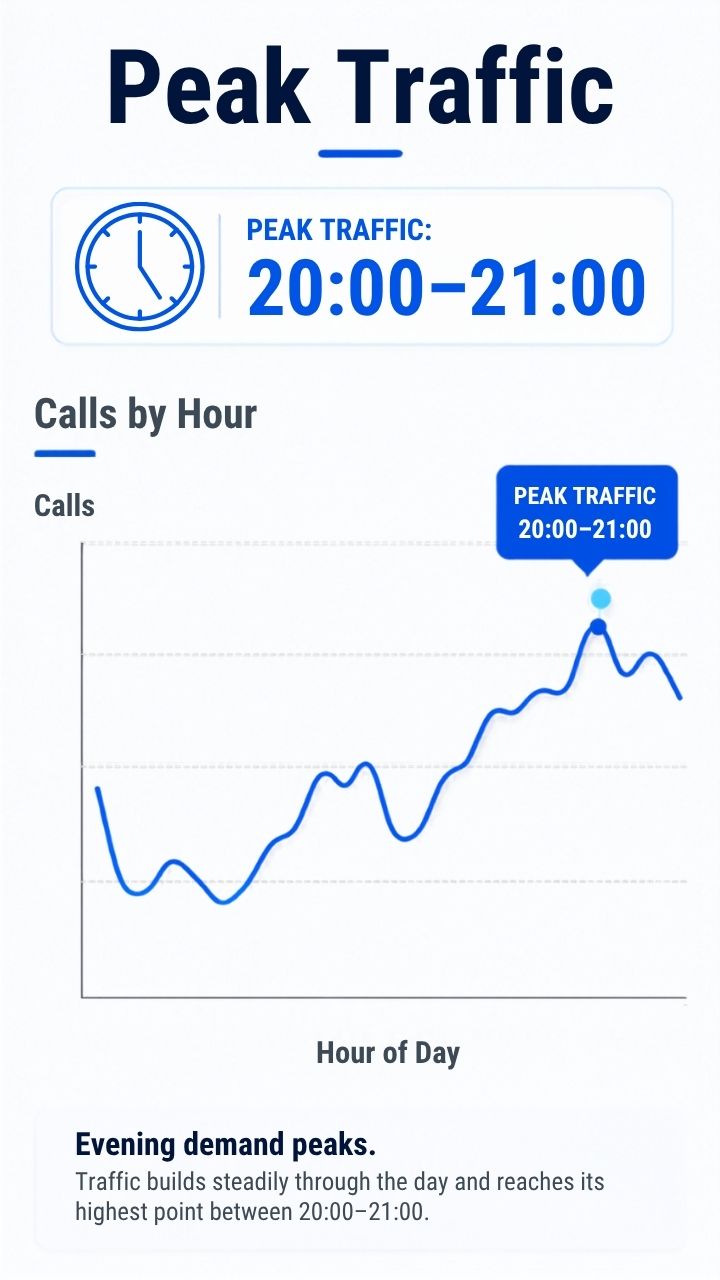
However, catering to this environment presents significant challenges. The property regularly faced overwhelming call volumes, leading to missed calls during peak check-in hours, staff burnout from answering repetitive questions, and long hold times that frustrated guests in a rush.
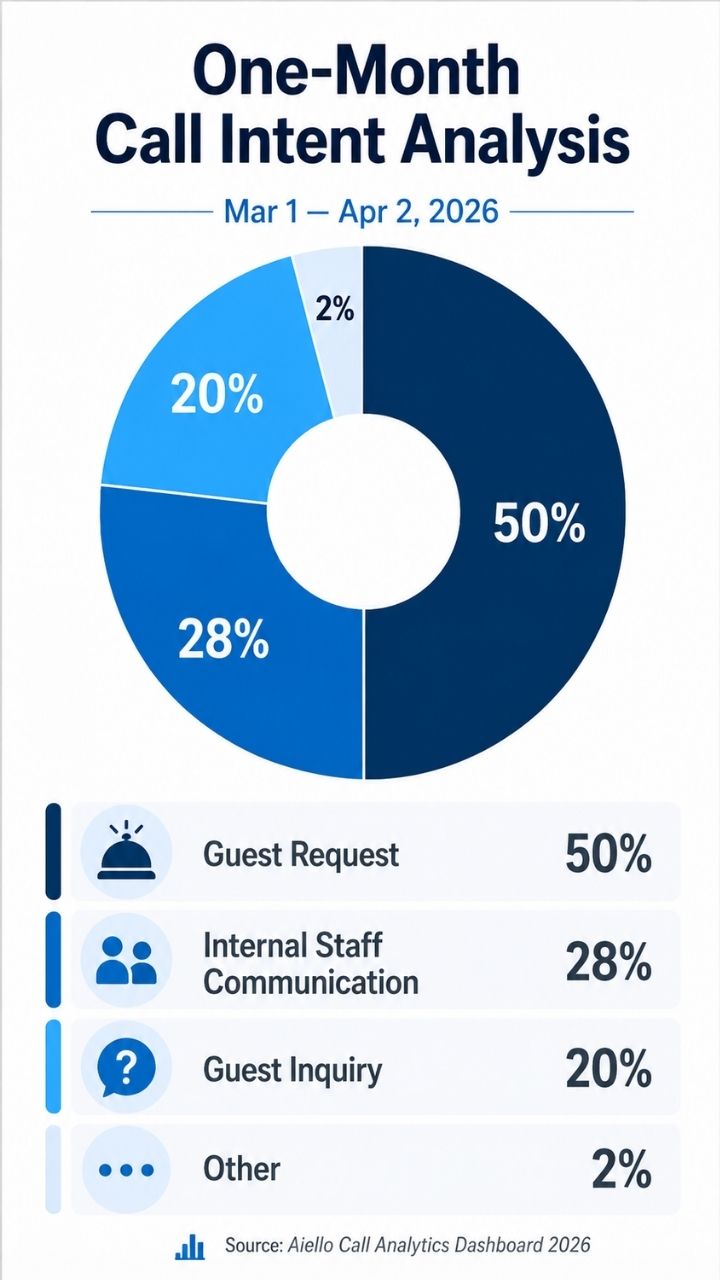
To understand these demands, we looked into the call intent types over a one-month period, revealing that the primary operational bottlenecks are repetitive:
To combat the repetitive operational bottlenecks of a transit-heavy environment, the hotel deployed an AI Call Agent functioning with a "brain, mouth, and hands".
For standard inquiries, the AI provides direct hotel information to answer all incoming guest calls.
[See How the AI Automates Routine FAQs]
By understanding the guest's specific intent, the AI transfers calls to the appropriate department, such as Food & Beverage, the Front Desk, Bell Desk, or Housekeeping.
When requests require actions, the AI integrates with the task management system.
• Direct Ticket Creation: Extracting details directly from the conversation such as room numbers, specific repair needs, or amenity quantities. The AI automatically generates tickets for laundry service, technical repair, and amenity delivery.
[Watch How It Works: Voice to Ticket]
• Call Routing: Tickets route to the correct department, bypassing the front desk.
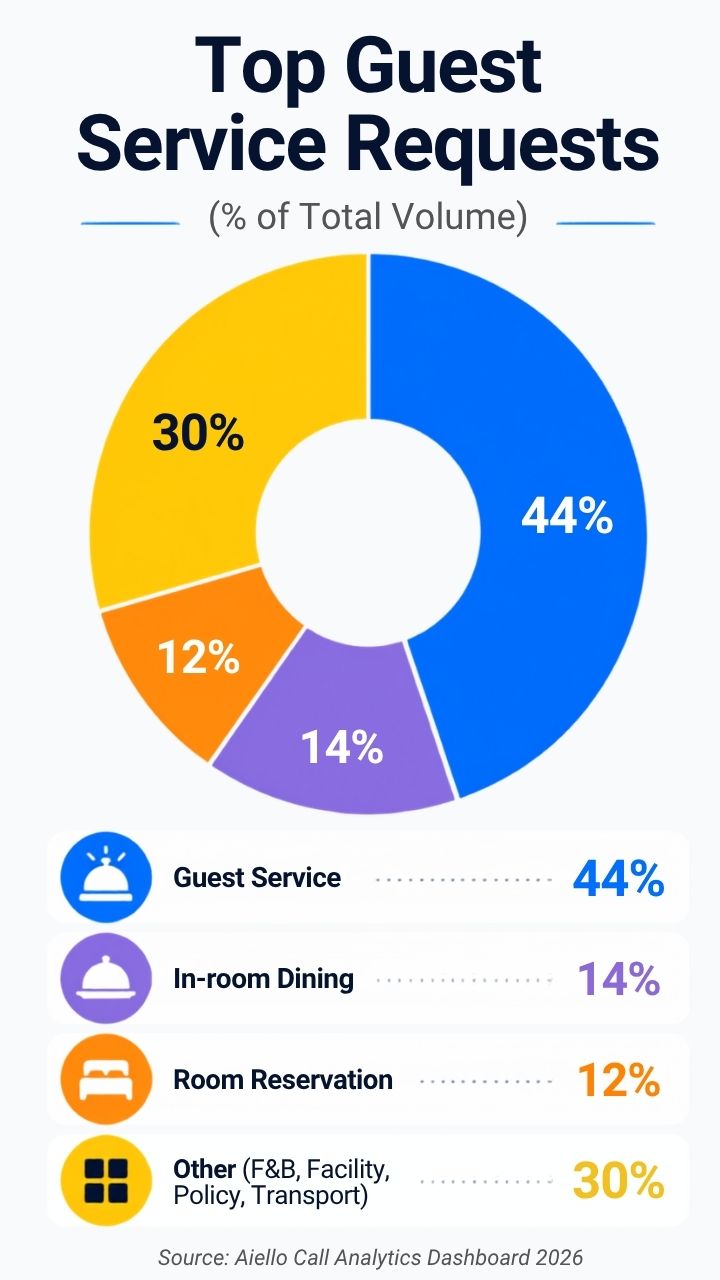
• Operational Impact: Task dispatching represented 44% of call volume. Instead of front desk agents manually logging and radioing every single request as they did in the past, the AI now generates and routes service tickets directly to the corresponding departments without any human intervention.
[Getting ready to launch? Read our Dos and Don'ts for setting up your AI agent]
Balancing cost control with guest experiences is essential for a property striving to be recognized as a leader in responsive hospitality. Implementing an AI-first call operation achieved this balance through direct results:
• Volume Handled: The AI handles ~60% of in-room guest calls.
• Increased Coverage: The missed call rate for external inquiries dropped by 18% (37% -> 19%)
• Cost Reduction: The property achieved a 50% lower monthly cost for 24/7 call coverage.
• Guest Acceptance: 61% of guests expressed gratitude toward the AI service.
• Work Optimization: Internal staff calls shifted to digital task dispatching, dropping from 29.2% to 4%.
[How to create your AI brain in 5 minutes]
Meaningful change requires a structured rollout.
Over a 30-day period, the Aiello team partnered with the property through every phase—from call analysis and system integration to pre-release internal testing and full deployment. Today, these metrics reflect a digital-first working culture, ensuring teams are freed from repetitive phone coordination and dedicated to higher-value guest interactions.
Want to use technology to lighten your staff's workload, but unsure about the cost, ROI, or how many lines you need? Book a quick 1-on-1 chat with our team today.